
Podcast Transcript: The Future of Mangrove Finance
Saad Allahwala interviews the lead developer of the world's largest blue carbon project on structural barriers to scale.
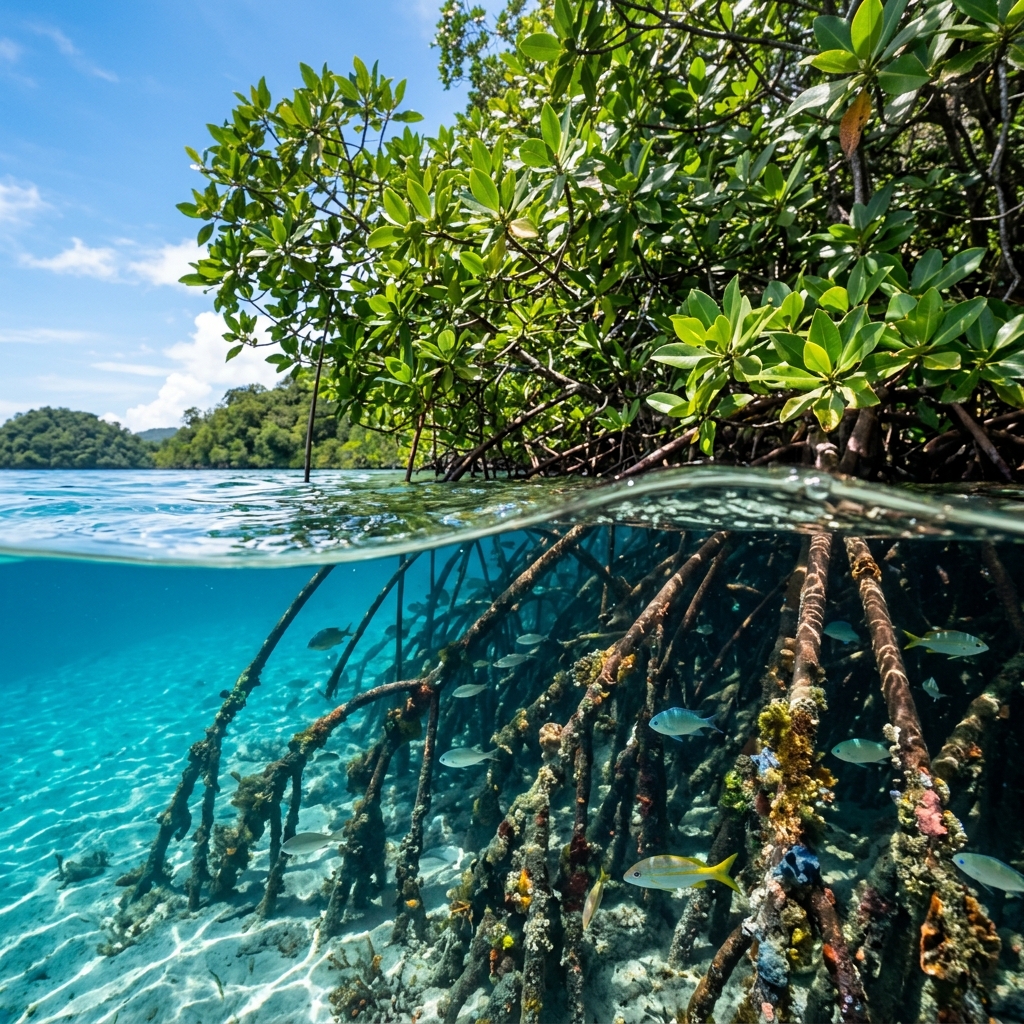
The following is a condensed excerpt from Episode 42 of the Trillion Trees Podcast, where Saad Allahwala unpacks the economics of "blue carbon" with leading marine biologists and project financiers.
The Premium on Blue Carbon
Saad: "Mangroves sequester up to four times more carbon per hectare than terrestrial tropical forests. They also provide incredible storm surge protection and fish spawning habitats. Why, then, is marine deployment lagging so far behind terrestrial forestry?"
Guest: "It comes down to tenure and complex hydrology. Planting a pine tree on private land is legally simple. Restoring a mangrove in a tidal zone involves multiple overlapping government ministries—fisheries, coastal management, environment. The legal frameworks in most developing nations haven't caught up to the ecological value of these inter-tidal zones."
Unlocking the Asset Class
Saad: "What unlocks the billions required to restore these coastlines?"
Guest: "De-risking the upfront capital. Mangrove restoration has a high failure rate if the hydrology isn't mapped perfectly. We need blended finance vehicles—philanthropic capital to fund the initial hydrological studies, and corporate capital to fund the physical planting and MRV (Monitoring, Reporting, and Verification). With the right public-private partnerships, blue carbon is the most lucrative and impactful nature asset class available today."